Scotland stands at a pivotal moment in its linguistic story. As the newly released report Multilingualism and New Scots Refugee Integration highlights, languages are far more than tools for communication—they are emotional, cultural, ecological, and relational resources that help people to flourish. Launched on UNESCO’s International Mother Language Day, the report calls for renewed national commitment to multilingualism as a cornerstone of integration, education, and community wellbeing.
At a time when more than 198 languages are spoken in Scotland (according to the latest census), the report shows clearly that multilingualism is now a defining feature of Scottish society. This aligns strongly with the Gaelic Language (Scotland) Act 2005, which recognises Gaelic as an official language, and with ongoing efforts to support Scots language revitalisation. These frameworks provide a model for valuing linguistic heritage—one that can be extended to the languages of New Scots, whose contributions are reshaping the nation’s cultural landscape.
The report also resonates with UNESCO’s Languages Matter: Global Guide to Multilingual Education, which emphasises the importance of mother‑tongue education, language rights, and nurturing learners’ full linguistic repertoires. The findings emerging from Scotland echo UNESCO’s global guidance: multilingualism enhances confidence, belonging, cognitive development, and resilience.
Yet the research also uncovers urgent challenges. Scotland faces a crisis in ESOL provision, marked by unstable funding, long waiting lists, and barriers that disproportionately affect women and people in temporary accommodation. Schools, meanwhile, are working hard to meet unprecedented linguistic diversity but require sustained professional learning and leadership support to embed multilingual pedagogies. The latest British Council survey of Scotland’s Languages shows that there is a firm foundation from which multilingual futures might be built.
Promising solutions are already visible. Community‑led initiatives—storytelling groups, nature‑based learning, multilingual cafés, and arts programmes—create safe spaces for healing, learning, and social connection. Trauma‑informed and ecological language pedagogies, whole‑school multilingual practices, and intergenerational digital connections are proving effective across sectors.
The report’s recommendations are clear: rebuild Scotland’s ESOL infrastructure; embed multilingual approaches across education; strengthen interpreting and translation; support community‑based integration; and invest in language leadership.
Scotland’s future is multilingual. By embracing the languages of New Scots alongside Gaelic, Scots, and the nation’s wider linguistic heritage, Scotland can become a global leader in inclusive, ecological, and hopeful language policy—exactly the vision championed by UNESCO.
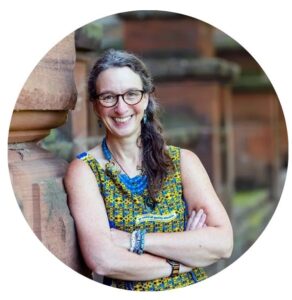 Professor Alison Phipps holds the UNESCO Chair in Refugee Integration through Languages and the Arts at the University of Glasgow where she is also Professor of Languages and Intercultural Studies. She is based in School of Education at the University of Glasgow where she uses creative, decolonising and restorative methods to teach widely in refugee studies, critical multilingual studies, religious and spiritual education, anthropology and intercultural education and education for non-violence.